
Koelsystemen voor vrachtwagens bepalen de toekomst van de koelketenlogistiek.
Naarmate de wereldwijde vraag naar verse voedingsmiddelen, geneesmiddelen en temperatuurgevoelige goederen blijft stijgen,vrachtwagenkoelsysteemis uitgegroeid tot een cruciale pijler van de moderne logistiek. Deze systemen zorgen ervoor dat producten tijdens het transport de juiste temperatuur behouden, waardoor de kwaliteit, veiligheid en naleving van de regelgeving in de gehele toeleveringsketen gewaarborgd blijven.Corunclima)
Van stadsdistributie tot langeafstandstransport: koelwagens – ook wel bekend als 'reefers' – zijn onmisbaar geworden voor diverse sectoren, van de voedingsindustrie tot de gezondheidszorg. De evolutie van koeltechnologie verandert ook de manier waarop wagenparken opereren, met als doel een hogere efficiëntie, lagere emissies en slimmere temperatuurregeling.
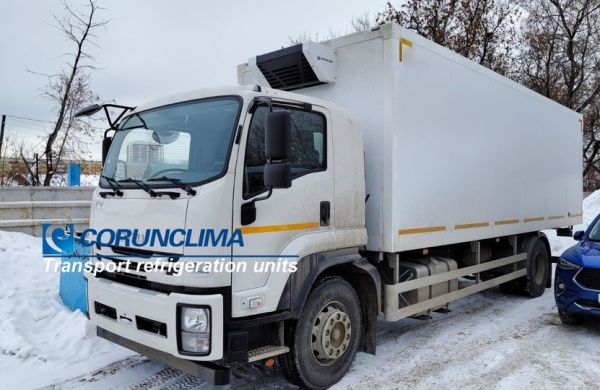
Hoe werkt een koelsysteem voor vrachtwagens?
In de kern werkt een koelsysteem voor vrachtwagens op basis van eendampcompressiecyclus, een beproefde technologie die in de hele HVAC- en koelindustrie wordt gebruikt. Dit proces omvat vier belangrijke fasen:
Compressie– Het koelmiddel wordt onder druk gezet tot een gas met een hoge temperatuur.
CondensatieEr komt warmte vrij, waardoor het gas in vloeistof verandert.
Uitbreiding– De druk daalt, waardoor het koelmiddel snel afkoelt.
VerdampingHet koelmiddel onttrekt warmte aan de laadruimte, waardoor de temperatuur daalt.Corunclima)
Deze systemen zijn afhankelijk van essentiële componenten zoals compressoren, condensatoren, verdampers en expansiekleppen, die allemaal worden aangestuurd door digitale temperatuurregelsystemen die zorgen voor constante prestaties tijdens het transport.
Technologische doorbraken in moderne systemen
1. Schakel over op elektrische koeling
Een van de belangrijkste trends is de overgang van traditionele systemen met verbrandingsmotoren of dieselmotoren naarvolledig elektrische koelunitsDeze systemen werken onafhankelijk van de motor van het voertuig, waardoor stationair draaien wordt voorkomen en het brandstofverbruik wordt verlaagd.
Moderne 48V-elektriciteitssystemen bieden bijvoorbeeld het volgende:
Geen emissies tijdens gebruik.
Minder geluidsoverlast bij leveringen in stedelijke gebieden
Onafhankelijke stroomvoorziening zonder de voertuigaccu leeg te trekken (Corunclima)
Deze verschuiving sluit aan bij strengere milieuregelgeving en de snelle invoering van elektrische voertuigen in logistieke vloten.
2. Onafhankelijke stroomvoorziening en energie-efficiëntie
Geavanceerde koelsystemen voor vrachtwagens beschikken nu over de volgende kenmerken:speciale lithiumbatterijpakkettenwaardoor continue koeling mogelijk is, zelfs wanneer het voertuig is uitgeschakeld. Deze innovatie biedt:
Tot25% brandstofbesparingdoor het stationair draaien van de motor te elimineren
Stabiele temperatuurregeling tijdens stilstand en pauzes van de chauffeur.
Verbeterde operationele flexibiliteit voor langeafstandstransport (Corunclima)
Dergelijke systemen zijn vooral waardevol in stedelijke omgevingen waar regelgeving tegen stationair draaien van motoren van kracht is.
3. Hoog koelvermogen en nauwkeurige regeling
Moderne koelinstallaties kunnen temperaturen bereiken die zo laag zijn als-20°Cwaardoor ze geschikt zijn voor het vervoer van diepvriesproducten zoals vlees, vis en geneesmiddelen.Corunclima)
Daarnaast bieden digitale bewakingssystemen operators de volgende mogelijkheden:
Volg de temperatuur in realtime.
Instellingen op afstand aanpassen
Zorg voor naleving van de normen voor de koudeketen.
Dit niveau van controle vermindert het risico op bederf en productverlies aanzienlijk.
4. Flexibele systeemtypen
Koelsystemen voor vrachtwagens zijn niet langer universeel toepasbaar. De huidige markt omvat:
Motoraangedreven eenheden– Rechtstreeks aangedreven door de motor van de vrachtwagen
Onafhankelijke eenheden– Uitgerust met aparte motoren of accu's
Elektrische systemen– Volledig op batterijen en emissievrij
Hybride oplossingen– Het combineren van meerdere energiebronnen
Elk type is ontworpen om te voldoen aan specifieke operationele behoeften, van kleine bestelbusjes tot grote koelwagens voor het vervoer van zware ladingen.Corunclima)
Belangrijke toepassingen in diverse sectoren
Koelsystemen voor vrachtwagens spelen een essentiële rol in diverse sectoren:
Eten en drinken– Het behouden van de versheid van zuivelproducten, vlees en groenten en fruit.
Farmaceutische producten– Het waarborgen van veilig transport van vaccins en medicijnen
Bloemenindustrie– Het beschermen van delicate bloemen tijdens transport
E-commerce en detailhandel– Ondersteuning van de snelle groei in de levering van gekoelde goederen
Hun vermogen om in uiteenlopende klimaten stabiele temperaturen te handhaven, maakt ze essentieel voor zowel de wereldhandel als de lokale distributie.